
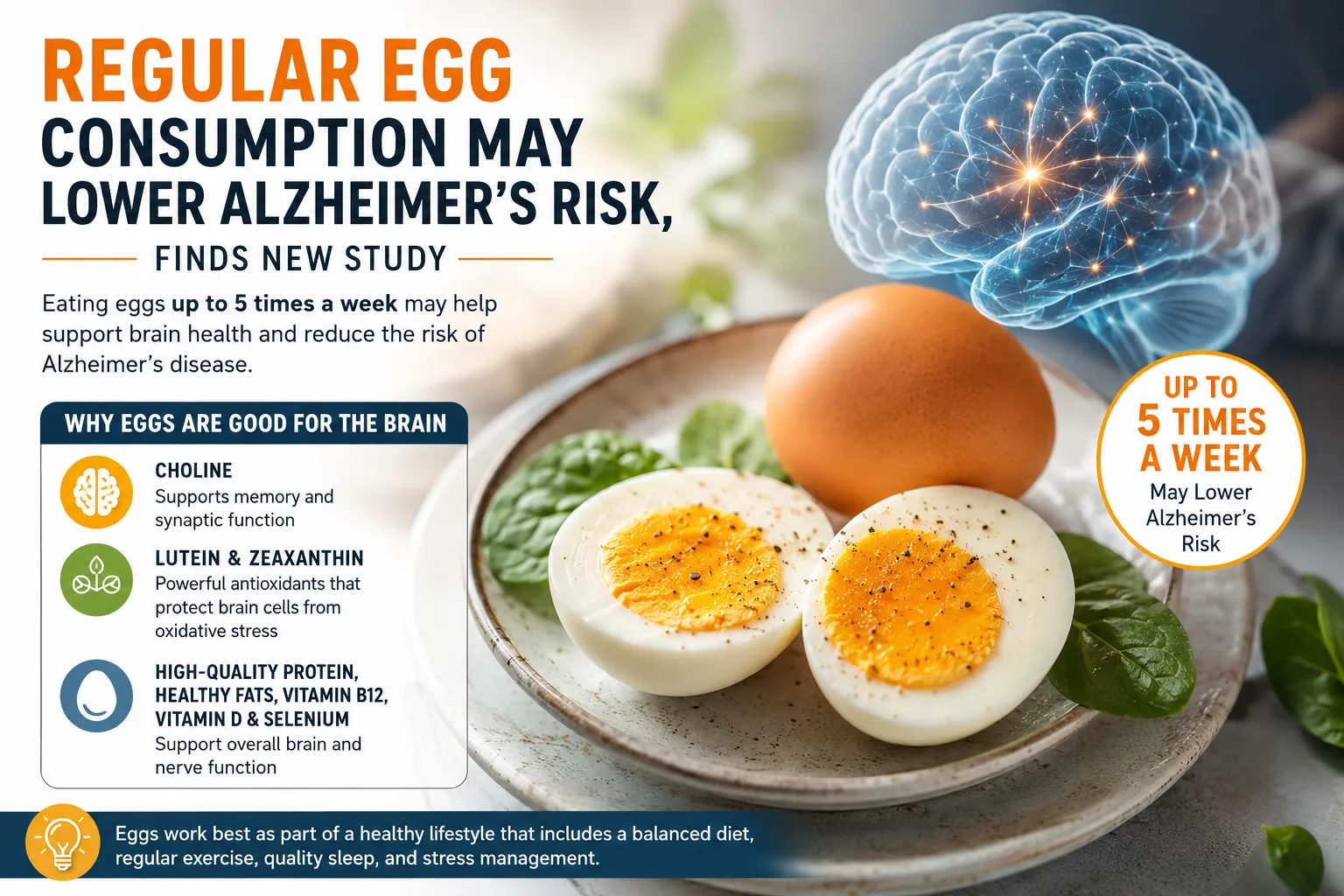
For years, nutrition experts have debated whether eggs are a “superfood” or something people should eat in moderation. Now, a new scientific study has added another fascinating layer to the conversation: regular egg consumption may be linked to a lower risk of Alzheimer’s disease.
The research, published in The Journal of Nutrition, analyzed data from nearly 40,000 older adults and found that people who consumed eggs regularly — especially up to five times a week — had a significantly lower risk of developing Alzheimer’s disease compared to those who rarely ate eggs. While the findings are promising, neurologists and brain health experts also caution that eggs alone are not a magic solution for preventing dementia.
So, what exactly did the study discover? And why are eggs suddenly becoming part of the brain-health discussion? Let’s break it down in a simple and practical way.
Understanding Alzheimer’s Disease and Why Prevention Matters
Alzheimer’s disease is the most common form of dementia and affects millions of people worldwide. It gradually damages memory, thinking ability, communication skills, and daily functioning. Scientists still do not fully understand what causes Alzheimer’s, but age, genetics, lifestyle, and diet all play important roles.
One of the biggest challenges with Alzheimer’s is that there is currently no complete cure. That is why researchers are increasingly focusing on prevention strategies. Studies now suggest that healthy lifestyle habits — including physical activity, quality sleep, stress management, and nutrition — may help reduce the risk of cognitive decline later in life.
Diet, in particular, has gained enormous attention because the brain requires a steady supply of nutrients to function properly. Foods rich in antioxidants, healthy fats, vitamins, and minerals are often linked with better brain performance and healthier aging.
What the New Egg Study Found
The recent study used data from the Adventist Health Study-2, a large long-term research project in the United States. Researchers followed nearly 39,500 adults aged 65 and older for more than 15 years.
During the study period, around 2,858 participants developed Alzheimer’s disease. Researchers then compared the eating habits of those participants with people who did not develop the condition.
The findings were striking:
-
People who ate eggs two to four times per week had around a 20% lower risk of Alzheimer’s disease.
-
Those who consumed eggs five or more times weekly showed approximately a 27% lower risk.
-
Moderate egg intake appeared to have the strongest association with better brain health.
Researchers emphasized that eggs contain several nutrients important for cognitive function and nervous system health.
However, they also clarified that the study only shows an association — not direct proof that eggs prevent Alzheimer’s disease.
Why Eggs May Support Brain Health
Eggs are considered nutrient-dense foods because they provide several important compounds in a relatively small serving. Scientists believe some of these nutrients may contribute to healthier brain aging.
Choline: The Brain’s Communication Helper
One of the most important nutrients found in eggs is choline. This nutrient helps the body produce acetylcholine, a neurotransmitter involved in memory, learning, and communication between brain cells.
Researchers have long known that acetylcholine activity decreases in people with Alzheimer’s disease. Because of this, scientists believe that sufficient choline intake may help support normal cognitive function over time.
Egg yolks are among the richest natural dietary sources of choline, making eggs particularly valuable in brain-focused nutrition research.
Lutein and Zeaxanthin May Protect Brain Cells
Eggs also contain lutein and zeaxanthin, two carotenoids commonly associated with eye health. However, recent studies suggest these compounds may also benefit the brain.
These antioxidants accumulate in brain tissue and help fight oxidative stress — a process that damages cells over time. Oxidative stress is considered one of the contributing factors in age-related cognitive decline and neurodegenerative diseases.
Researchers believe that antioxidants may help protect neurons from damage and inflammation, potentially supporting memory and mental sharpness as people age.
Eggs Also Provide Healthy Fats and Protein
Another reason eggs attract attention in nutrition science is their balanced nutritional profile. Eggs contain:
-
High-quality protein
-
Omega-3 fatty acids
-
Vitamin B12
-
Vitamin D
-
Selenium
-
Phospholipids
These nutrients support overall brain and nervous system function. Protein helps maintain muscle mass and body strength in older adults, while omega-3 fatty acids contribute to brain cell structure and communication.
Vitamin B12 deficiency, meanwhile, has been associated with memory problems and neurological issues in some older adults.
Why Experts Say Eggs Alone Are Not Enough
Despite the encouraging findings, neurologists warn people not to misunderstand the study. Eating eggs regularly does not guarantee protection against Alzheimer’s disease.
Many experts point out that the participants in the study generally followed healthier lifestyles overall. The Adventist population involved in the research is known for habits such as:
-
Eating balanced diets
-
Exercising regularly
-
Avoiding smoking
-
Limiting alcohol consumption
-
Maintaining healthier body weight
Because of these factors, it becomes difficult to isolate eggs as the single reason for reduced Alzheimer’s risk.
Neurologists explain that brain health depends on multiple lifestyle factors working together. Nutrition is only one piece of a much larger puzzle.
The Mediterranean and MIND Diet Connection
The study also aligns with broader research supporting brain-friendly eating patterns like the Mediterranean diet and the MIND diet.
These diets emphasize:
-
Fruits and vegetables
-
Whole grains
-
Nuts and seeds
-
Olive oil
-
Fish
-
Legumes
-
Limited processed foods
Both diets are associated with lower inflammation, better cardiovascular health, and improved cognitive performance.
Eggs can fit naturally into these balanced eating patterns when consumed in moderation. Experts say the key is not simply adding eggs to an unhealthy diet filled with processed foods, sugar, and trans fats.
Instead, brain health appears to improve when people consistently follow overall healthy lifestyle habits.
Are There Any Concerns About Eating Eggs?
Eggs have sometimes been criticized because they contain cholesterol. However, recent nutrition research suggests that moderate egg consumption is safe for most healthy people.
For many individuals, eating one egg daily does not significantly increase heart disease risk. Still, people with certain medical conditions — such as uncontrolled diabetes or cardiovascular disease — should follow personalized advice from their doctor or nutritionist.
Cooking methods also matter. Boiled, poached, or lightly cooked eggs are generally healthier choices than heavily fried eggs prepared with excessive butter or processed oils.
Balance and moderation remain important.
The Bigger Picture of Brain Health
While the latest findings are exciting, researchers stress that no single food can completely prevent Alzheimer’s disease. Brain health depends on long-term lifestyle habits built over decades.
Experts commonly recommend:
-
Regular physical activity
-
Good sleep quality
-
Mental stimulation
-
Social interaction
-
Stress management
-
Balanced nutrition
-
Blood pressure and diabetes control
Eggs may become one useful part of that broader strategy, especially because they are affordable, accessible, and nutrient-rich.
Final Thoughts
The new research linking regular egg consumption with lower Alzheimer’s risk adds valuable insight to the growing field of nutrition and brain health. Nutrients such as choline, lutein, zeaxanthin, and omega-3 fatty acids found in eggs may support memory, cognitive performance, and healthy aging.
However, experts caution against viewing eggs as a miracle food. Alzheimer’s disease is complex, and prevention requires a combination of healthy habits rather than reliance on any single ingredient.
For most people, including eggs as part of a balanced diet rich in natural and minimally processed foods may be a smart and practical choice for overall wellness — including brain health. The real takeaway from the study is not just about eggs, but about the long-term impact of consistent healthy living on the aging brain.
releaseprcore.com releaseprcore.com releaseprcore.com releaseprcore.com releaseprcore.com releaseprcore.com releaseprcore.com releaseprcore.com releaseprcore.com releaseprcore.com releaseprcore.com releaseprcore.com releaseprcore.com releaseprcore.com releaseprcore.com releaseprcore.com releaseprcore.com releaseprcore.com releaseprcore.com releaseprcore.com releaseprcore.com releaseprcore.com releaseprcore.com releaseprcore.com releaseprcore.com releaseprcore.com releaseprcore.com releaseprcore.com releaseprcore.com releaseprcore.com releaseprcore.com releaseprcore.com releaseprcore.com releaseprcore.com releaseprcore.com releaseprcore.com releaseprcore.com releaseprcore.com releaseprcore.com releaseprcore.com releaseprcore.com releaseprcore.com releaseprcore.com releaseprcore.com releaseprcore.com releaseprcore.com releaseprcore.com releaseprcore.com releaseprcore.com releaseprcore.com releaseprcore.com releaseprcore.com releaseprcore.com releaseprcore.com releaseprcore.com releaseprcore.com releaseprcore.com releaseprcore.com releaseprcore.com releaseprcore.com releaseprcore.com releaseprcore.com releaseprcore.com releaseprcore.com releaseprcore.com releaseprcore.com releaseprcore.com releaseprcore.com releaseprcore.com releaseprcore.com releaseprcore.com releaseprcore.com releaseprcore.com releaseprcore.com releaseprcore.com releaseprcore.com releaseprcore.com releaseprcore.com releaseprcore.com releaseprcore.com releaseprcore.com releaseprcore.com releaseprcore.com releaseprcore.com releaseprcore.com releaseprcore.com releaseprcore.com releaseprcore.com releaseprcore.com releaseprcore.com releaseprcore.com releaseprcore.com releaseprcore.com releaseprcore.com releaseprcore.com releaseprcore.com releaseprcore.com releaseprcore.com releaseprcore.com releaseprcore.com releaseprcore.com releaseprcore.com releaseprcore.com releaseprcore.com releaseprcore.com releaseprcore.com releaseprcore.com releaseprcore.com releaseprcore.com releaseprcore.com releaseprcore.com releaseprcore.com releaseprcore.com releaseprcore.com releaseprcore.com releaseprcore.com releaseprcore.com releaseprcore.com releaseprcore.com releaseprcore.com releaseprcore.com releaseprcore.com releaseprcore.com releaseprcore.com releaseprcore.com releaseprcore.com releaseprcore.com releaseprcore.com releaseprcore.com releaseprcore.com releaseprcore.com releaseprcore.com releaseprcore.com releaseprcore.com releaseprcore.com releaseprcore.com releaseprcore.com releaseprcore.com releaseprcore.com releaseprcore.com releaseprcore.com releaseprcore.com releaseprcore.com releaseprcore.com releaseprcore.com releaseprcore.com releaseprcore.com releaseprcore.com releaseprcore.com releaseprcore.com releaseprcore.com releaseprcore.com releaseprcore.com releaseprcore.com releaseprcore.com releaseprcore.com releaseprcore.com releaseprcore.com releaseprcore.com releaseprcore.com releaseprcore.com releaseprcore.com releaseprcore.com releaseprcore.com releaseprcore.com releaseprcore.com releaseprcore.com