
Introduction
Elon Musk, the billionaire entrepreneur behind SpaceX, Tesla, and X (formerly Twitter), has once again captured global attention with another bold idea—a space-bound backup of all human knowledge. He recently teased a project called “Encyclopedia Galactica,” a futuristic archive meant to preserve humanity’s most important information beyond Earth. According to Musk, the concept is an evolution of “Grokipedia,” an AI-driven knowledge system powered by his artificial intelligence model, Grok.
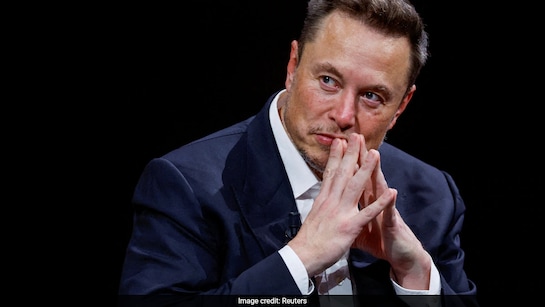
While the name may sound like something straight out of science fiction, the idea behind it is deeply practical: to protect human knowledge in case of disasters, wars, or planetary-scale risks and ensure that the legacy of our civilization endures, even if Earth faces catastrophic events. Musk’s vision blends science, technology, space exploration, and long-term human survival into one ambitious project.
In this article, we explore what the Encyclopedia Galactica could mean, how it might work, the challenges involved, and why Musk believes humanity needs a backup in the stars.
What Is the Encyclopedia Galactica?
The term “Encyclopedia Galactica” has been used in science fiction for decades, most famously in works by Isaac Asimov and Carl Sagan. It refers to a massive, carefully curated archive of knowledge that exists across the galaxy.
Musk’s version follows a similar concept:
-
A massive digital archive of all human knowledge
-
Built and structured by advanced AI systems, especially Grok
-
Designed as a long-term memory vault containing everything important about human history, science, culture, and learning
-
Stored in multiple off-Earth locations, such as the Moon, Mars, or even deep-space stations
-
Resistant to disasters, wars, and environmental collapse
In simple words, it’s a space-based library for all of humanity, protected from anything that might threaten Earth.
bjscivid.org | celebcineworld.com | celebbuzze.com
secretsscoop.com | cinemacubic.com
Why Does Elon Musk Want It?
Musk has often spoken about his concerns for humanity’s future. Whether it’s climate change, nuclear threats, global pandemics, asteroid strikes, or technological risks, he believes humans should have backup plans.
Here are the core reasons behind the idea:
1. To Preserve Human Knowledge
Knowledge can be lost quickly—just like ancient libraries destroyed in wars. Musk wants to make sure future generations, even thousands of years from now, can access humanity’s learnings.
2. To Protect Civilization
If humanity experiences a major disaster, a space archive ensures we can rebuild. It acts like a disaster recovery system for the entire species.
3. To Support Space Colonization
As Musk plans settlements on the Moon and Mars, having instant access to scientific, medical, and technical knowledge is essential.
4. To Create a Legacy That Outlives Earth
Musk dreams of humans becoming a multiplanetary species. With this archive, our knowledge will remain safe even if Earth becomes uninhabitable someday.
How AI Will Build the Encyclopedia
The project relies heavily on Grok AI, which Musk claims is designed to “understand the world in real-time” by reading posts on X and learning from global conversations.
AI will help by:
-
Collecting information from billions of data points
-
Curating accurate and useful content
-
Removing false information
-
Creating structured entries, similar to Wikipedia
-
Continuously updating knowledge
-
Translating content across languages
This means the Encyclopedia won’t just be a static database—it will constantly evolve.
Where Will the Archive Be Stored?
Musk hasn’t released technical details, but based on his previous statements, the knowledge vault may be placed in:
1. Lunar Storage Modules
The Moon is stable, has no atmosphere, and offers long-term protection. NASA and other agencies are already exploring data storage on lunar surfaces.
2. Mars Colonies
SpaceX’s dream of Mars settlement includes data centers, communication stations, and scientific hubs.
3. Deep-Space Satellites
Long-lasting orbiting data centers could carry backups far from Earth.
4. Multiple Locations
The archive may be copied across many places for redundancy—just like cloud storage, but in space.
Technologies Required for the Project
Creating such a system requires advancements in:
-
Radiation-proof data storage
-
AI curation and long-term memory models
-
Energy-efficient computing suitable for space
-
Launch systems to transport storage modules
-
Space communication networks
-
Robotics to handle maintenance
SpaceX’s Starship, once fully operational, could play a significant role in transporting the Archive units to the Moon or Mars.
Challenges and Concerns
Such an enormous idea also faces major challenges:
1. Data Accuracy
Storing human knowledge is risky if the information itself is flawed. AI must be extremely reliable at filtering misinformation.
2. Technical Stability
Data in space must survive extreme temperatures, radiation, and micrometeoroids.
3. Ethical Issues
Who decides what gets stored?
What if political, cultural, or religious groups disagree on content?
4. Cost
Launching massive archives into space will cost billions.
5. Long-Term Maintenance
Who will update the archive 100 years from now? 500 years? 1,000 years?
Despite these hurdles, the idea pushes humanity toward long-term thinking.
Why This Project Excites Scientists and Space Enthusiasts
The concept of storing human knowledge in space isn’t new—but Musk’s reach and technology make it feel more achievable.
Researchers believe this project could:
-
Advance future education
-
Preserve global history
-
Inspire new space technologies
-
Boost planetary backup strategies
-
Create scientific opportunities for future civilizations
Some even say it could help extraterrestrial life, if it exists, understand humanity.
Conclusion
Elon Musk’s “Encyclopedia Galactica” might sound like a dream from a futuristic novel, but its core purpose is grounded in reality. In an age of climate risks, wars, digital overload, and AI-driven misinformation, the idea of a protected, well-organized, space-based knowledge archive feels more relevant than ever.
Whether or not the project succeeds, Musk has once again challenged the world to think bigger—beyond countries, beyond Earth, and beyond our time.
Humanity has always preserved knowledge in books, libraries, and digital clouds.
Musk simply wants to take the next step—
to store our entire story among the stars.