
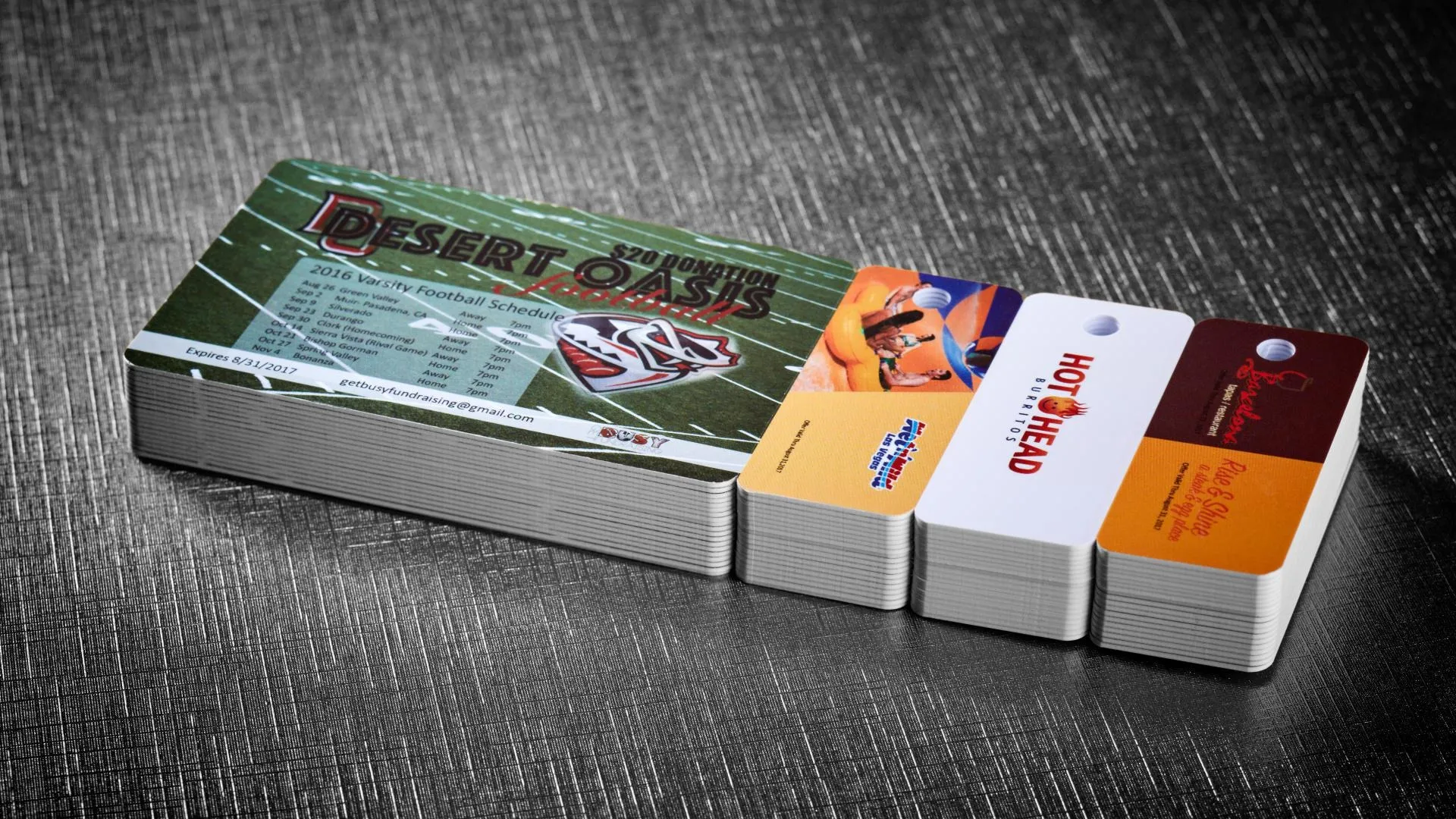
If you have ever run a school or team fundraiser, you know how it usually goes. People order cookie dough or wrapping paper out of politeness, you spend weeks collecting forms and handing out products, and the group keeps only a small part of the money.
A discount card fundraiser skips most of that work and keeps far more of what you raise. Supporters buy one plastic card for around $10 to $25, use it to save at local businesses all year, and almost the full price goes straight to your cause.
The steps below walk you through planning, pricing, and selling a campaign that hits its goal.
Step 1: Set A Clear Fundraising Goal
Start with the exact amount your group needs rather than a rough idea. A specific target, such as $5,000 for new uniforms, gives the rest of the plan a number to work from. Divide that goal by the profit you earn on each card to learn how many you must sell. At $18 profit per card, a $5,000 goal takes fewer than 280 cards, well within reach for a motivated group.
Step 2: Recruit Local Businesses for Your Card
The discounts decide whether people buy, which is why you choose businesses your supporters already visit. Restaurants, car washes, coffee shops, and salons usually agree, because the card sends them paying customers at no upfront cost. Aim for eight to twelve offers, enough to make the card worth its price without crowding the back.
When you pitch a business, keep the ask short and clear:
- Explain that the card brings them new local customers
- Request one standing offer, like 10% off or buy-one-get-one
- Confirm the exact wording and how long it stays valid
- Collect their logo and written approval before printing
Step 3: Design a Discount Card People Will Keep
People keep a card that looks sharp and survives daily use, so build the design around both. Plastic lasts the full year in a wallet, while paper bends and tears within weeks. Brands like Durccard handle the printing with an online designer, a free design service, and artwork upload, plus barcodes or a writable panel when offers need tracking.
- Front of the card
Lead with your group name, logo, and one headline offer that catches the eye at a glance.
- Back of the card
List the remaining discounts in plain text, with a barcode or serial number if partners want to track redemptions.
Step 4: Price the Cards and Calculate Your Profit
Set the price between $10 and $25, based on how much the discounts are worth over a year. Because each card costs only a little to print, most of the sale price becomes profit. Selling 500 cards at $20, with a $2 printing cost, raises about $9,000 for your cause.
Important!
Price the card against the savings, not against what feels cheap. If the discounts save a buyer $200 a year, a $20 card is an easy purchase, and pricing it lower only shrinks what you raise.
Step 5: Sell the Cards Through Every Channel
Hand every member a stack of cards and a simple way to collect payment. The more places the card appears, the faster sales add up. Run these channels together from day one:
- In person at games, meetings, and community events
- Through each member’s friends, family, and coworkers
- On social media with a payment link and a pickup spot
- At partner businesses willing to display a small sign
Step 6: Track Sales and Wrap Up Strong
Keep a running count of every card sold, and the team always knows how close the goal is. When the campaign wraps, thank your buyers and business partners by name, and save their contact details for next time. Sellers who return and partners who renew turn the next fundraiser into half the work.
Tips to Raise Even More
A few small choices separate groups that hit their goal from those that stall. None costs extra, and each one lifts sales:
- Set a firm end date that pushes people to buy now
- Pick discounts people use weekly, like coffee or meals
- Reward your top three sellers with a prize they want
- Keep the offer list short enough to read in seconds
Mistakes That Cost Fundraisers Money
Most campaigns that fall short make the same handful of errors. Weak discounts top the list because buyers ignore a card that barely saves them anything. Too few partners create the same effect, leaving the back of the card looking empty. Pricing above the value of the savings stalls sales just as fast, and so does printing on flimsy paper that cracks before the year is out. Above all, skipping a deadline lets the whole effort drift until people forget to buy.
Final Thoughts
The most successful fundraisers treat the card as the centerpiece of the campaign, not an afterthought. When the design is strong, the discounts are useful, and the process is simple for both organizers and supporters, a discount card becomes something people actually keep and use throughout the year.
To support that kind of outcome, Duracard offers a clear way to build custom plastic discount cards online. Organizers can set up their design, include local business offers, and place orders starting from 250 cards, depending on campaign size.
Production is handled in the USA, with typical turnaround times of around five business days. The result is a wallet-sized card built for everyday use, helping your fundraiser stay visible long after the initial push is over. If you’re planning a campaign, you can explore discount card fundraising options through Duracard and get started when you’re ready.